Lytica: Transforming into a Thought Leader
This was our final project for a B2B Marketing Analytics elective at Boston College, created for a real company on a tight timeline. It was a great chance to move past theory and apply strategic frameworks to a real-world challenge.
My main contribution was using AI to accelerate our research and deliverable creation. I used Google's NotebookLM to create a mock podcast from the company's data, and Perplexity to identify emerging competitors and best practices. I also used ChatGPT deep research reports to rapidly educate myself and my team on the intricacies and nuances of the ProcureTech space using advanced prompt engineering techniques. We packaged these insights with web data from Similarweb and presented our findings directly to the company's CEO.
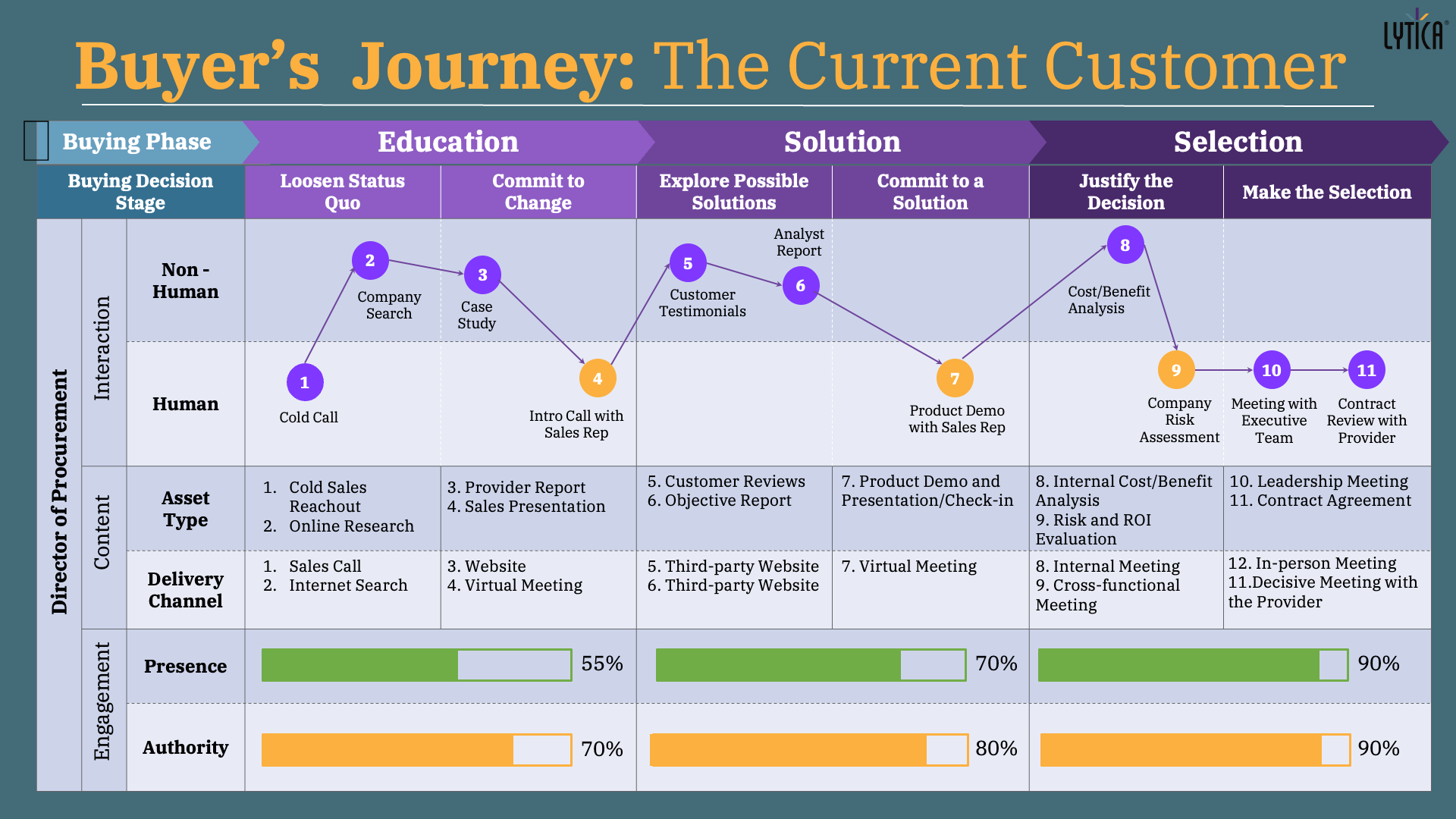
Current Customer Journey
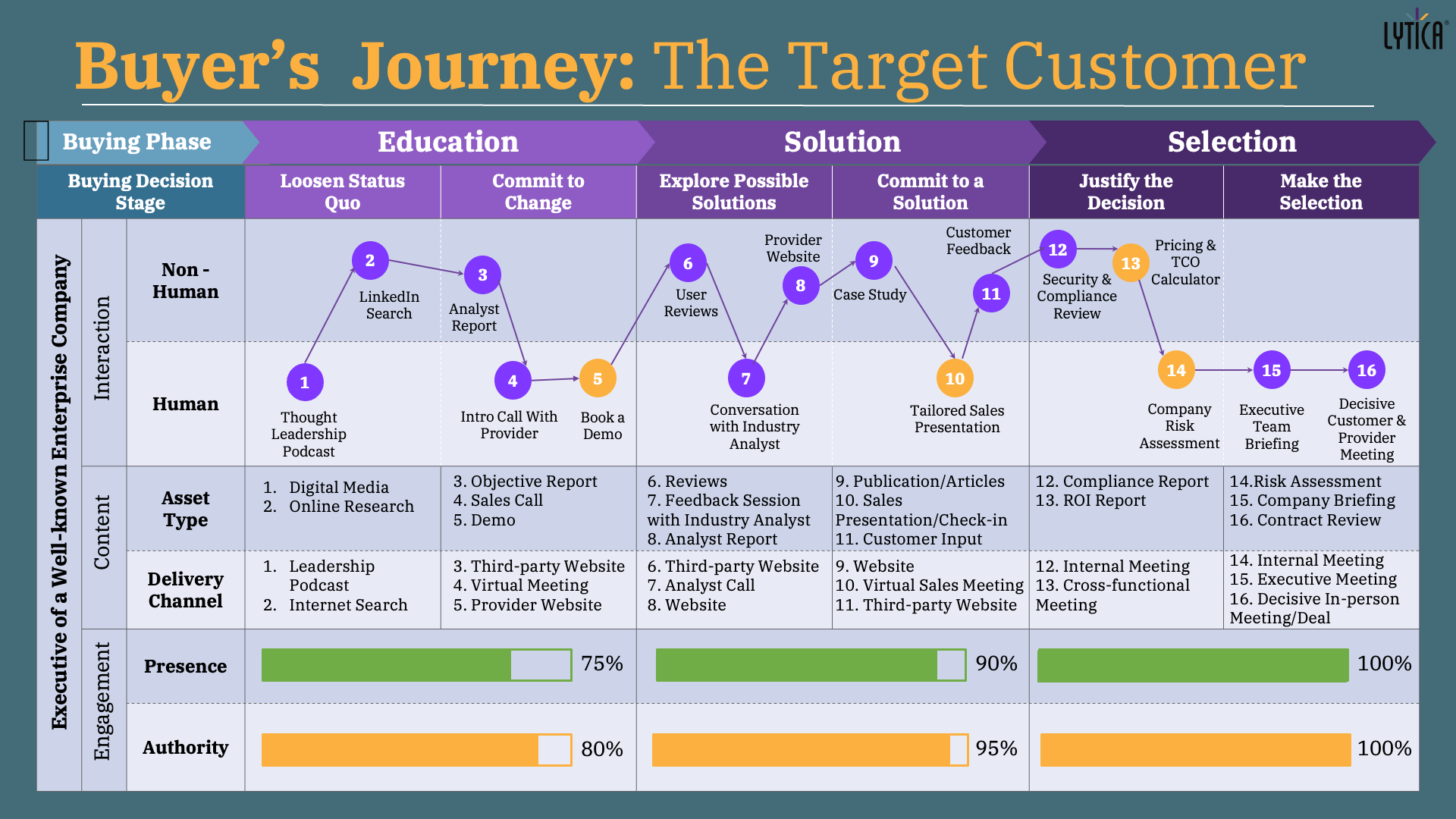
Target Customer Journey
For the Buyer's Journey Comparison:
We started by mapping their current customer journey against our proposed target. This visual helped us show the strategic gap we needed to close.
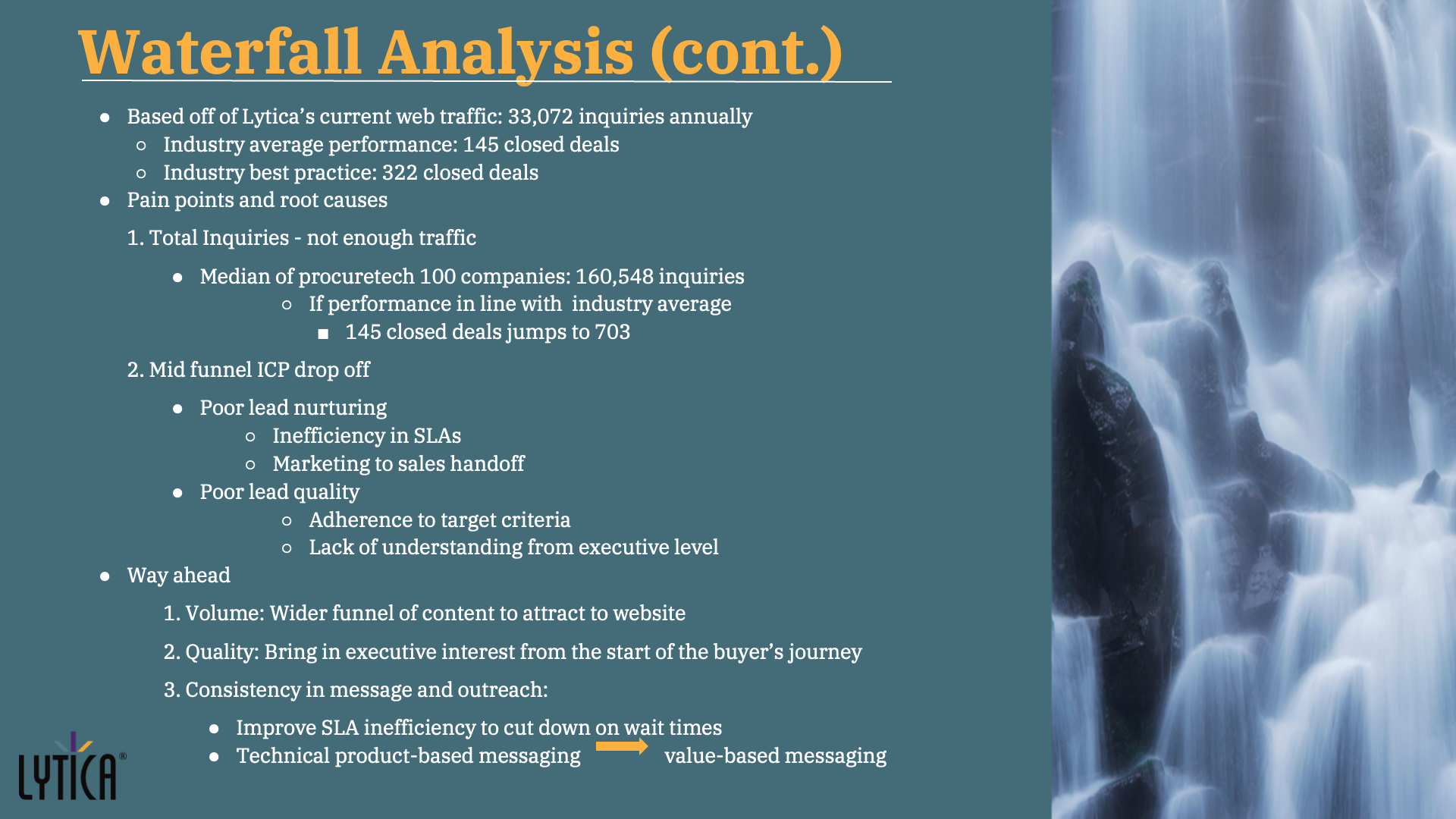
For the Waterfall Analysis: Next, we used a waterfall analysis to diagnose the problem with data. It showed us exactly where leads were dropping off and proved the core issues were low web traffic and a disconnect in the mid-funnel.
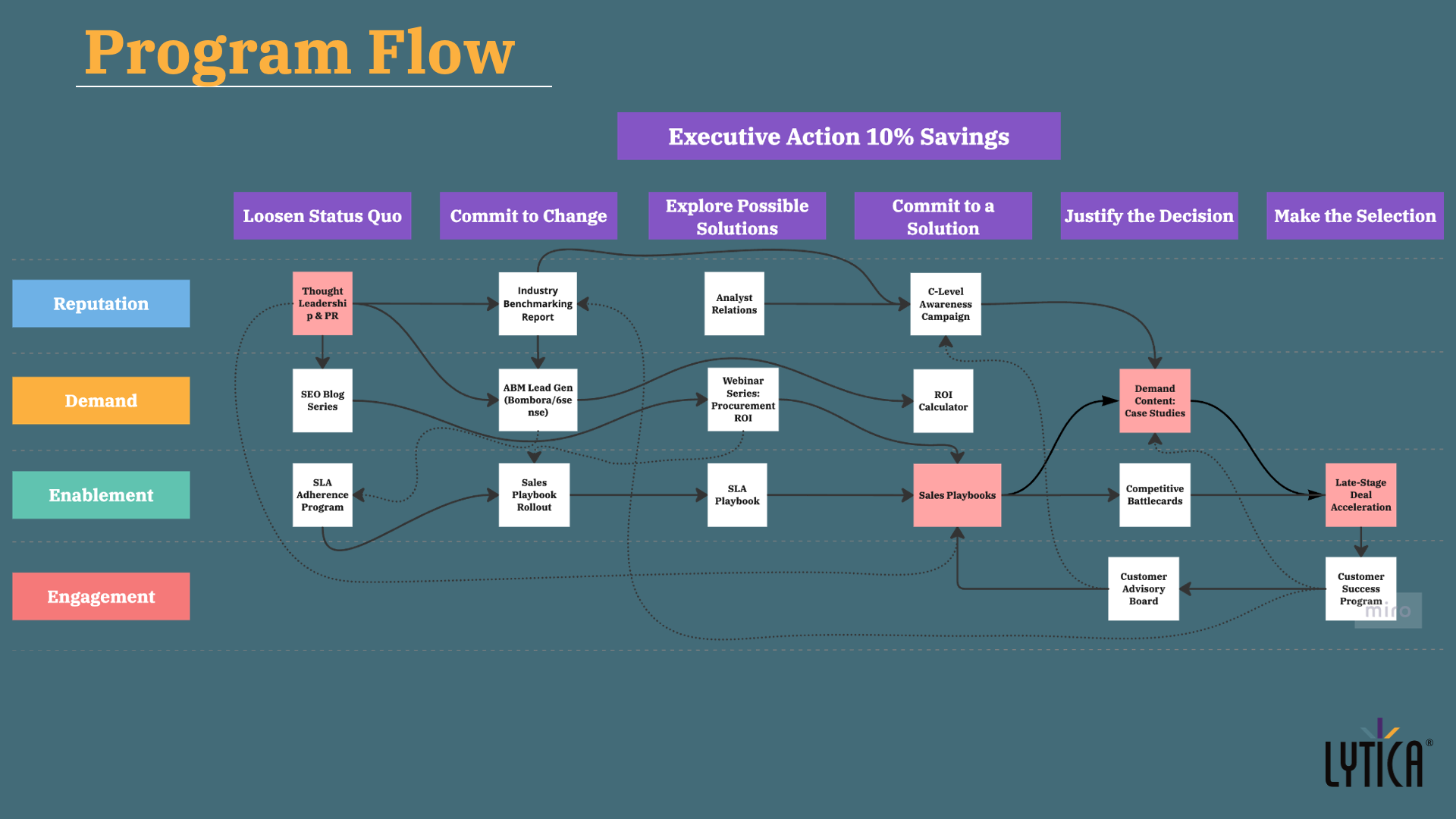
For the Program Flow: Our solution was this integrated program flow. It's a complete plan that connects everything from brand reputation and demand generation to sales enablement, ensuring all efforts work together.
Full Case Study Presentation
Click the arrow buttons or use keyboard arrows to navigate through the slides
Company Background
About Lytica
Lytica stands as North America's leading Advanced Analytics platform for supply chain intelligence, serving Fortune 500 manufacturers and retailers with sophisticated risk management solutions. Founded in 2015 and headquartered in Ottawa, Canada, the company has experienced exponential growth yet faced a critical challenge: while their product suite commanded respect, their executive team remained relatively unknown within broader industry discussions.
Despite serving prestigious clients including Intel, Microsoft, and Boeing, Lytica struggled with brand recognition beyond procurement circles. This anonymity was particularly problematic as they sought to expand into new vertical markets and attract higher-value enterprise clients who increasingly rely on executive thought leadership as a key evaluation criterion in vendor selection processes.